

Co-producing research in a hostile environment: reflections from practice
Within the Helen Bamber Foundation research department, we have been working on an exciting, fully co-produced research project. Co-produced research is when both researchers with lived experience of the research topic and researchers with more “traditional” academic experience work together as team members on a project, with the aim of integrating and equally valuing both forms of knowledge.
People with lived experience shaping research is increasingly recognised as pivotal to producing evidence that is relevant and grounded. It also reduces the risk of assumptions that academic researchers may otherwise make. However, often people with lived experience are brought into projects when the research topic and agenda have already been finalised. With this co-production project, we wanted to start from scratch and work together from the beginning. Over the course of a year and a half we have taken time to build our team, engage in two-way training for both sets of researchers, work out a way of making group decisions, identify a critical research question and plan every element of the project together. We are about to start the data collection phase of our research and will work together throughout each stage; conducting interviews, analysing the data and sharing our findings with different audiences.
This project reflects the Helen Bamber Foundation's commitment to lived experience led research, which we have cemented by signing this Call to Action put together by Asylos and the Human Trafficking Research Network and pledged to promote the inclusion, credibility and recognition for individuals with lived experience within our research work.
In a blog hosted by Kings College London, a few members of the co-production team with lived experience of seeking asylum reflected on their experience of the co-production project so far. Read it here:
The year 2025 has been hard for anyone working in migration policy and practice, as we continue to defend and justify the need for a humane and just immigration system. The environment continues to become more hostile, with human rights increasingly treated as something that must be earned, rather than a right that belongs to everyone regardless of their background.
One of our sources of hope, despite the current environment, has been being a part of the Helen Bamber Foundation’s Co-production Research Team. This team is a dream come true, not only because of the passion and talent everyone brings, but also because of the collective commitment to conducting research that is meaningful and grounded in lived experience.
Co-production has become a popular and crucial approach in various fields, but the concept can sometimes be challenging. For example, there is no single, universal definition of what co-production means. Different organisations and researchers interpret co-production in diverse ways, adopting various methods and approaches that reflect their specific contexts, values, and understandings of partnership. As a team, we have had to adopt quite a few methods to overcome the challenges that come with this novel way of doing research.
Our first task as a team was to create a group charter. A group charter establishes an agreed way of working together by outlining our values, behaviours, roles, and decision-making style. This was created collaboratively, with input from every member, about the values we need to adopt for the team. In our group charter, one of the acknowledgements we made from day one was not to fall into the pitfalls of co-production, including tokenism and unequal power dynamics, and to work continuously to address them. Read the full Group Charter here.
The list of values and skills we have adopted within our group charter are:
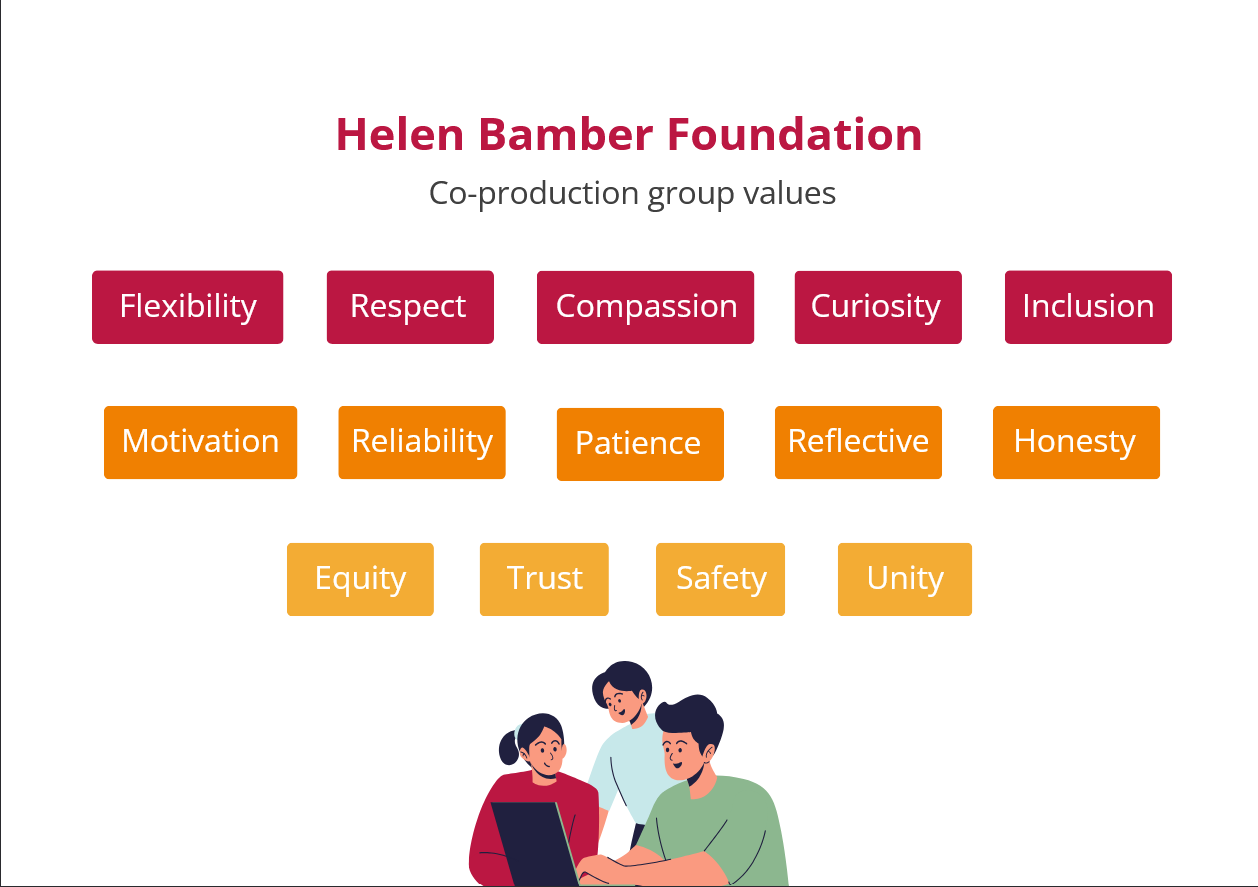
We would argue that every one of these values is fundamental and non-negotiable. These values are actively embedded in the work we do, and we hold peer reflection meetings, using the group charter as a framework to assess whether our conduct and decision-making still align with our ideals. Alongside these sessions, we have created a space dedicated to lived experience researchers to speak openly about their own challenges and provide mutual support.
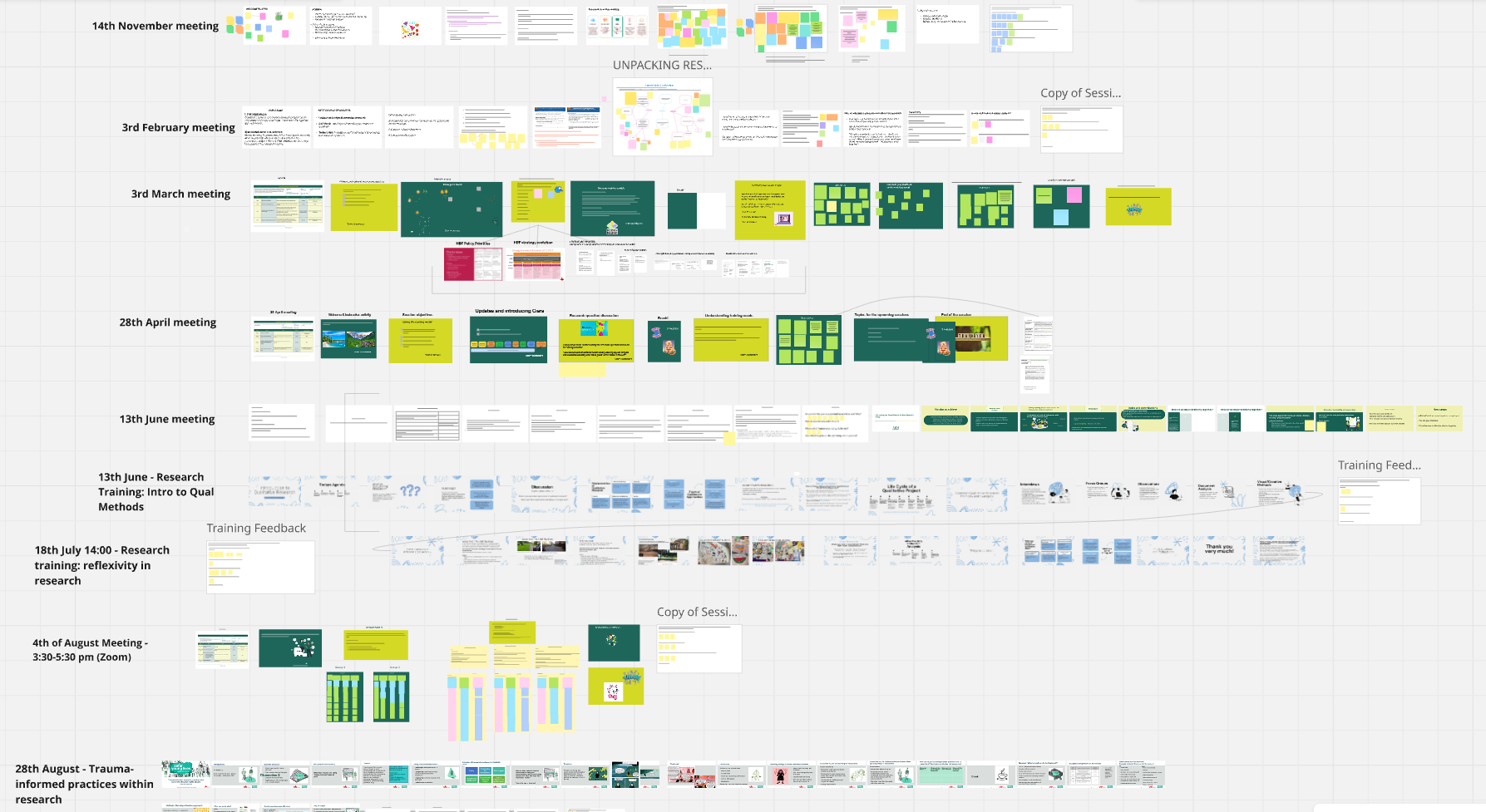
Feedback is part of the continuous process within the group. At the end of each session, we invite every member to reflect and share with the group how we can improve the way we are working together. To ensure ongoing equity and inclusion, all major decisions are made collectively through group voting, which reinforces a sense of shared responsibility and ownership. Over the summer, we also hosted several training workshops for all members to explore key research topics such as reflexivity in research, trauma-informed practices, and introductions to qualitative and quantitative research.
Flexibility is an important skill in any kind of research, but it becomes crucial in co-produced work, particularly in the current political and policy climate, where the ground is never steady and the goalposts are always shifting. One challenge we faced was having to completely pivot our research topic after a year of development. Our initial research topic of interest was focused on an issue that many team members identified as a significant source of struggle at that time. However, the introduction of new policies fundamentally altered the landscape of this issue. Changing our research topic in response to these policy shifts was not an easy decision, but it was a necessary one. Our aim has always been not only to model effective co-produced research between lived experience researchers and academic researchers, but also to generate findings with genuine policy relevance and impact, particularly in areas where research has been scarce. As authenticity and relevance to lived experience are central principles of this approach, we collectively decided to change the project’s direction. Although this transition was not always smooth in meetings, it ultimately allowed us to engage more directly with the evolving policy context, and we are now focusing on exploring the impact of newly proposed asylum reforms.
This ability to adapt while staying true to the purpose of the work is one of the most important strengths of our group. Co-production is, at its essence, about social justice - it is about working in partnership with people who are often affected by policies but rarely get a chance to contribute to them. This requires the work to centre on issues that matter deeply to both lived experience researchers and academic researchers alike, while also producing work of real value and authenticity.
For researchers with lived experience, the emotional demands of working in this field cannot be underestimated, as it involves being continuously confronted with the inequalities that have shaped our lives. Being hopeful and motivated enough to make a difference does not come easy. As a group, we have reflected extensively on the sobering reality that the impact of research in the real world can sometimes be slow. However, the solidarity, care, and collective action within this group continue to be a source of inspiration and reinforce our belief in the power of working this way.
Ultimately, the experiences shared in this blog are rooted in our group charter. This charter has served as a point of reference throughout our work within migration policy research, helping us navigate challenges, stay true to our shared values, and continue working together in a difficult and often hostile environment. Through guiding both how we conduct our research and how we work together, the charter continues to shape our everyday practice. For this type of research to be grounded in values is essential, as is ensuring that the barriers faced by lived-experience researchers are addressed through solidarity and mutual support. We hope that more research groups will adopt and develop co-produced approaches of this kind.