


Trafficking survivors at risk as government plans to remove vital protection, new data shows
Helen Bamber Foundation, a leading human rights charity, warns that trafficking survivors could be left without protection as new Freedom of Information data reveals over 90% of grants of permission to stay in the UK were to support recovery from exploitation.
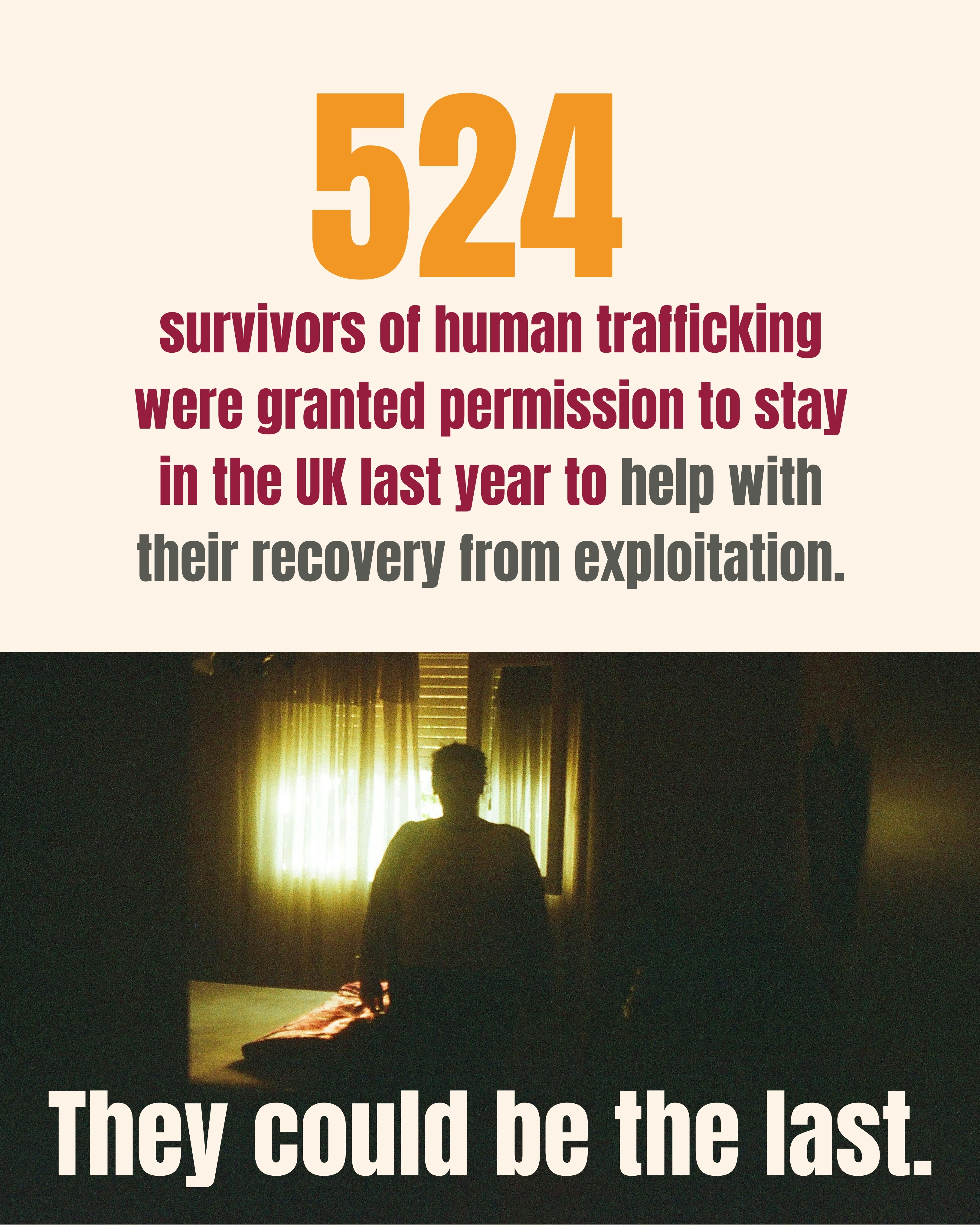
The government plans to remove this route to temporary permission to stay for confirmed victims of trafficking and modern slavery, despite 524 of 572 grants were made in 2025 to support survivors’ recovery.
Without secure immigration status, survivors can be left in poverty, destitution and isolation, unable to work or access the support they need. This can increase their risk of further abuse, exploitation and re-trafficking.
The Helen Bamber Foundation, which provides specialist care and support to survivors of trafficking, torture and other forms of extreme cruelty, is warning that government plans to remove a route to temporary permission to stay in the UK could leave trafficking survivors without the security they need to recover and rebuild their lives.
As part of the Immigration and Asylum Bill, the government plans to entirely remove the option of granting temporary immigration status to confirmed victims of trafficking and modern slavery to support their recovery. Without this protection, survivors could be left in limbo, fearing detention or removal from the UK and struggling to access the support they need.
Helen Bamber Foundation’s new figures acquired via a Freedom of Information (FOI) request highlight the importance of this form of protection. More than 90% of 572 survivors granted temporary protection was to support their recovery from physical or psychological harm caused by exploitation. A further four grants enabled survivors to seek compensation or take part in criminal proceedings, while 44 were made in connection with cooperation with the police.
The Helen Bamber Foundation’s clinical work shows that immigration insecurity can prevent survivors from engaging with psychological treatment and deter victims from disclosing their experiences of exploitation. International guidance has made clear that secure immigration status is a central part of protection and recovery and should not be seen a ‘discretionary reward’.
Despite this, the government says it “does not wish to be obligated to grant leave for the purpose of supporting individuals in their recovery”. Even when pressed during parliamentary debates on the Bill, it has not provided an assessment of the impact on survivors or how many could be left without secure immigration status as a result.
While there are alternative forms of leave that could be accessed by some survivors of trafficking and modern slavery, these are not guaranteed nor accessible for all. In reality, these alternate routes of immigration cannot be relied upon to provide the adequate protection and security the survivors need. For example, some survivors also claim asylum, but the asylum backlog and the government’s commitment to swiftly returning people from countries such as Albania, Eritrea and Vietnam (the top three countries other than the UK from which victims of trafficking originate) without considering their asylum claim increases the risk of survivors being removed from the country and put at significant risk or left in limbo. Furthermore, changes introduced to refugee status mean that even those who are granted it will be on shorter periods of leave and could have to wait up to 30 years until they can get settled status.
Muhamet’s story: why protection matters
Muhamet, a recognised victim of trafficking, illustrates the consequences of leaving survivors without secure immigration status. Trafficked in his country of origin and subsequently exploited in Europe, Muhamet escaped his traffickers and travelled to the UK to claim asylum. Soon after arriving, he was exploited again by someone claiming to know his family back home. Following his escape, he experienced homelessness and significant deterioration in his mental health.
Muhamet has since been diagnosed with post-traumatic stress disorder (PTSD), anxiety and depression.
In 2025, he received a positive Conclusive Grounds decision through the National Referral Mechanism, formally recognising him as a victim of trafficking. His solicitor submitted a detailed application for temporary permission to stay, supported by medical evidence and two expert reports explaining why he met the relevant criteria.
Despite this evidence, his application was refused on the basis that he could supposedly access medical care in his country of origin. His asylum claim remains pending at appeal stage.
Without secure status, the uncertainty and delays have taken a significant toll on Muhamet’s mental health. Rather than being able to focus on recovery, he continues to face the consequences of prolonged insecurity.
His case highlights how even formal recognition as a victim of trafficking does not guarantee the stability survivors need to begin rebuilding their lives.
Kamena Dorling, Director of Policy at the Helen Bamber Foundation, said:
“The Helen Bamber Foundation is calling on the government to reconsider the Immigration and Asylum Bill and retain a route to permission to stay for confirmed victims of trafficking and modern slavery who need it to recover from the harm they have suffered. Removing this vital protection risks leaving survivors more vulnerable to further exploitation and abuse by criminals.
Recognition as a victim should be a meaningful step towards safety and recovery, not the start of another period of uncertainty. Survivors need a genuine opportunity to access psychological and medical treatment, rebuild their lives and feel secure without the constant fear of removal. If the UK is serious about tackling human trafficking, it must take a survivor-focused approach.”
Notes
The National Referral Mechanism (NRM) is the UK system for identifying and formally recognising potential victims of modern slavery and human trafficking. A positive Conclusive Grounds decision confirms that a person is recognised as a victim of trafficking or modern slavery under the NRM.
Temporary permission to stay granted through the NRM is commonly referred to as VTS leave or Temporary Permission to Stay (TPS).
The figures cited are for 2025 and refer to grants of temporary permission to stay to victims recogised through the NRM.
Clause 39 of the Immigration and Asylum Bill proposes removing the route to temporary permission to stay for the purpose of supporting recovery from trafficking-related harm.